

6 min read
Ask five people how much caffeine is in an energy drink and you’ll get five guesses, usually too high. Most cans sold in India carry less than a cup of brewed coffee. What changes the picture is the size of the can, how many you drink, and what else is in it.
Here are the numbers side by side, and what to do with them.
The short version
- Indian rules cap caffeinated drinks at 300 mg per litre. That’s 75 mg in a 250 ml can. A 237 ml cup of brewed coffee has about 96 mg.
- Most healthy adults can have up to 400 mg of caffeine a day, from all sources combined.
- Caffeine is the same molecule whether it comes from a plant or a lab. What differs is what comes with it.
- Children, pregnant or breastfeeding women, and anyone sensitive to caffeine should skip these drinks.
Caffeine per serving, side by side
| Drink | Serving | Caffeine | Sugar |
|---|---|---|---|
| Brewed coffee | 237 ml cup | about 96 mg | Depends how you take it |
| Black tea | 237 ml cup | about 48 mg | Depends how you take it |
| Green tea | 237 ml cup | about 29 mg | None unless added |
| Leading energy drink | 250 ml can | 75 mg | about 27 g |
| Mass-market energy drink | 250 ml bottle | 72 mg | about 17 g, plus sweeteners |
| Large-can energy drink | 350 ml can | 105 mg | about 38 g |
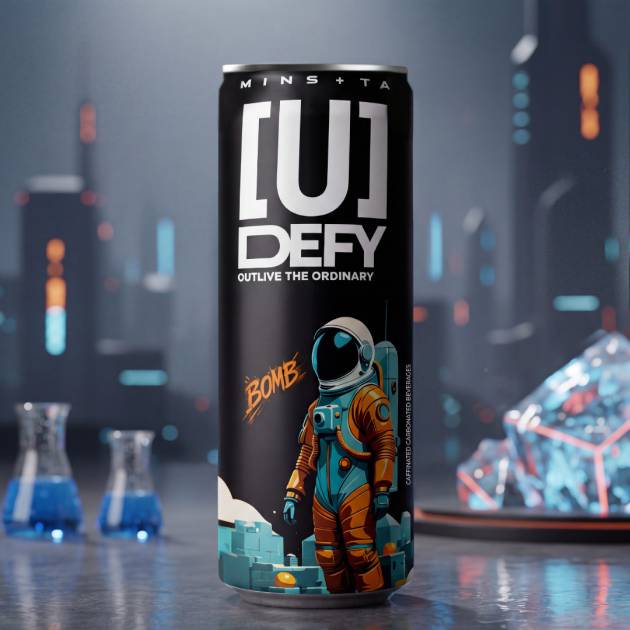
| [U]Defy Bomb | 250 ml can | 75 mg | 25 g |
| [U]Defy Mint Melon, Ginger Twist | 250 ml can | about 49 mg | 0 g |
Sources: Mayo Clinic; Indian can labels, checked October 2026.
Two things stand out. First, the legal ceiling does a lot of the work. Indian rules cap caffeinated drinks at 300 mg per litre, which is exactly 75 mg in a 250 ml can. That’s why leading 250 ml energy drinks and our own Bomb land on the same number, with a mass-market bottle just under it at 72 mg. Second, can size matters more than brand. A bigger can at the same strength simply holds more caffeine, which is how a 350 ml can reaches 105 mg.
How much is too much?
For most healthy adults, up to 400 mg of caffeine a day is considered safe, according to Mayo Clinic. That’s from everything: chai, coffee, cola, these drinks, and even some cold and headache tablets.
Sources: Mayo Clinic; FSSAI caffeinated beverage standard; Drake et al., 2013.
A day with two cups of coffee (about 190 mg) and one 75 mg can comes to about 265 mg. That’s fine for most people. Add three more cans and you’re near 490 mg, past the 400 mg line and well past the 500 ml a day printed on the can.
Signs you’ve had too much include jitters, a racing heart, an upset stomach and trouble sleeping. Sensitivity varies a lot from person to person, so treat 400 mg as a ceiling, not a target.
Natural vs synthetic caffeine: what’s actually different
The caffeine molecule is the same whether it comes from coffee beans, tea leaves or yerba mate, or is made in a factory. Your body can’t tell them apart, and a milligram is a milligram.
What differs is everything around it. Plant extracts bring caffeine along with other compounds from the plant. Synthetic caffeine is pure and consistent, which is why it’s widely used. Choosing plant sources is a choice about ingredients, not a claim that the caffeine works differently.
Our sugar-free cans, Mint Melon and Ginger Twist, get their caffeine from yerba mate and green tea extract. We say “natural caffeine” because that’s where it comes from. We don’t claim it works better, because it doesn’t need to. Bomb, our full-strength original, lists caffeine as an ingredient in its own right, the way most energy drinks do.
49 mg or 75 mg: choosing by caffeine
Lighter
about 49 mg
Mint Melon, Ginger Twist
- About half a cup of brewed coffee
- Suits an afternoon can, or a day that already had chai
- For people who feel caffeine quickly
- 0 g sugar
Full strength
75 mg
Bomb
- The most a 250 ml can may carry in India
- For people who drink coffee and know how they handle it
- Not one to have late in the day
- 25 g sugar
If you’re not sure which suits you, start lower. Starting lower costs you nothing, while a can that’s too strong can cost you a night’s sleep.

About 49 mg caffeine and 0 g sugar per 250 ml can.
Who should skip it
Quick answers
How much caffeine is in a 250 ml energy drink?
Between about 36 and 75 mg, because Indian rules allow caffeinated drinks 145 to 300 mg per litre. Leading brands sit at or near the 75 mg ceiling. The exact amount has to be printed on the label.
Do bigger cans have more caffeine?
Usually, yes. The limit is per litre, so a 350 ml can at the same strength can hold up to 105 mg, against 75 mg in a 250 ml can. Check the can size, not just the name.
Is 75 mg of caffeine a lot?
It’s less than a 237 ml cup of brewed coffee, which has about 96 mg. For most adults it’s a moderate amount. Someone who rarely has caffeine will notice it more.
Is natural caffeine better than synthetic?
It’s the same molecule and works the same way in the body. The difference is where it comes from and what else the drink contains.
Sources
- Mayo Clinic: Caffeine, how much is too much?
- Mayo Clinic: Caffeine content for coffee, tea, soda and more
- FSSAI, Food Products Standards and Food Additives Regulations: caffeinated beverages (2.10.6)
- Drake et al., Caffeine effects on sleep taken 0, 3, or 6 hours before bed (2013)
- Indian pack labels of leading energy drink brands, 250 ml and 350 ml
- [U]Defy nutrition labels, per 100 ml (udefy.in product pages)
Sources checked October 2026.
