

6 min read
A can before training is a habit in a lot of gyms, from Supela in Bhilai to Telibandha in Raipur. Whether it does anything comes down to three things: how much caffeine is in it, when you drink it, and what time you plan to sleep.
The short version
- Caffeine is one of the best-studied aids to exercise. Research puts the effective range at 3 to 6 mg per kg of body weight, with some effect from about 2 mg per kg.
- Have it about 30 to 60 minutes before you train.
- For a normal gym session you don’t need the sugar. Water matters more.
- Skip it for late sessions, if you’re sensitive to caffeine, or if you’re under 18.
Does an energy drink actually help a workout?
The caffeine in it can. Caffeine is among the most researched supplements in sport, and the evidence is consistent. In the right amount, it can help with both endurance and strength work, and it can make hard effort feel a little easier. The International Society of Sports Nutrition reviewed that research in 2021 and backs it up.
The rest of the can matters much less. Sugar, flavours and vitamins aren’t what makes the difference in a one-hour session. So the useful question isn’t “which energy drink is best for the gym?” It’s “how much caffeine is in this can, and is that the right amount for me?”
How much caffeine is enough
The studied doses are based on body weight. Here’s what they look like in milligrams:
| Body weight | Lower end (2 mg/kg) | Studied range (3 to 6 mg/kg) |
|---|---|---|
| 55 kg | 110 mg | 165 to 330 mg |
| 70 kg | 140 mg | 210 to 420 mg |
| 85 kg | 170 mg | 255 to 510 mg |
Source: ISSN position stand on caffeine and exercise performance, 2021.
Now put those numbers next to a can. A 250 ml can in India holds at most 75 mg. Our Mint Melon and Ginger Twist hold about 49 mg. A single can sits below the doses studied for performance, and we’d rather say that than pretend otherwise.
For most people who train a few times a week, that’s fine. They aren’t chasing a lab result. They want to feel ready to train without wrecking their sleep, and a moderate amount of caffeine leaves the rest of the day intact.
What we’d never suggest is stacking cans to reach a number. Indian labels say not more than 500 ml a day for a reason, and side effects like jitters, a racing heart and poor sleep get more likely as the dose goes up.
Timing: when to drink it
- 60min
An hour before
Caffeine usually peaks in the blood about an hour after you drink it, so this timing has it working as you start.
- 30min
Half an hour before
Still fine for most sessions. Don’t drink it on the walk into the gym and expect it to work by your first set.
- during
During training
Water. Sip through the session, more if it’s hot or you’re sweating a lot.
- after
After training
Water and a proper meal. Not another can.
Sugar or sugar-free before training?
For a typical gym session of about an hour, you don’t need sugar from a drink. If you’ve eaten in the last few hours, you have what you need for a weights session. The sugar in a regular can is mostly extra calories, around 100 for a can with 25 to 27 g of sugar.
Longer endurance work, like a run of over an hour, is different, and carbohydrate during the session can help. For that, sports nutrition advice points to food, gels or drinks made for the purpose.
That’s why, for the gym, we point people to our sugar-free cans: about 49 mg of caffeine, 0 g sugar and 22 kcal.
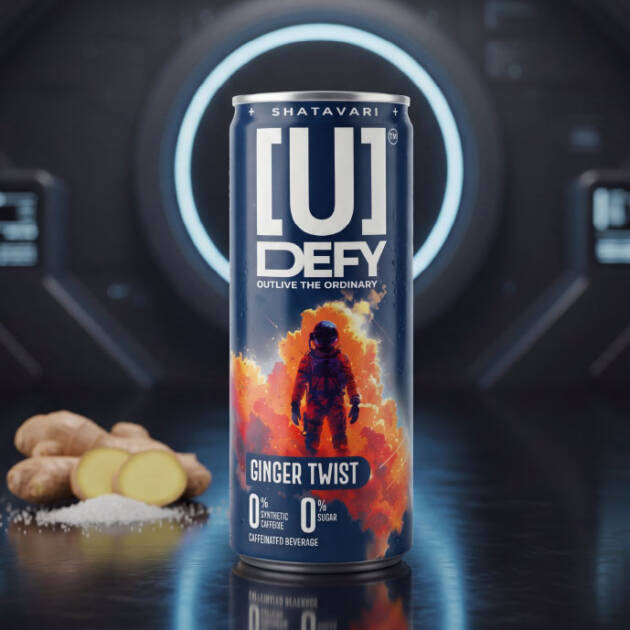
About 49 mg caffeine, 0 g sugar and 22 kcal per 250 ml can.

The same numbers as Ginger Twist, with mint and melon.
Energy drink vs pre-workout powder
| Canned caffeinated drink | Pre-workout powder | |
|---|---|---|
| Caffeine | Capped at 75 mg per 250 ml in India | Varies widely and is often much higher per scoop. Check the label. |
| Other ingredients | Flavour, sweetener or sugar, vitamins | Can include beta-alanine, creatine, citrulline and more |
| Dose | Fixed per can | You choose the scoop, which makes it easy to overdo |
| Convenience | Cold from the fridge | Needs mixing |
| Suits | Casual and regular trainers | People following a planned supplement routine |
Neither is necessary. If you train well-fed, well-slept and hydrated, those three do more than anything in a can or a tub.
When to skip it
- 1
You train late
Caffeine taken six hours before bed can still disrupt sleep. If you train at 7 pm and sleep at 11, skip it. Your body recovers while you sleep, and a bad night costs more than a can gives.
- 2
You’re sensitive to caffeine
If coffee gives you jitters or a racing heart, a can will too.
- 3
You’re under 18, pregnant or breastfeeding
Indian labels on caffeinated drinks say they aren’t recommended for you.
- 4
You haven’t had water
A fizzy can isn’t hydration. Drink water first.
- 5
You have a heart or blood pressure condition
Check with your doctor before using caffeine around exercise.
A note for runners
We’ve been the official beverage partner at the Raipur Marathon, and the race-day advice is the oldest rule in running: nothing new on the day. If you want caffeine before a race, try it before a few long training runs first, at the same time and in the same amount. Water first, always.
Quick answers
Is it OK to have an energy drink before the gym every day?
For most healthy adults, one can within the daily limits is fine. Watch the total: chai, coffee and cans all count toward 400 mg a day, and Indian cans say not more than 500 ml a day.
Should I have an energy drink after a workout?
There’s no need. After training, your body wants water and food. Caffeine late in the day also gets in the way of sleep, which is when recovery happens.
What is a good natural pre-workout drink?
Water first. If you like caffeine, a cup of coffee or a moderate caffeinated drink 30 to 60 minutes before training does the main job. A banana covers you if you haven’t eaten.
Is an energy drink good for runners?
Caffeine can help endurance, but test it in training first. For runs over an hour, you’ll also want carbohydrate and water during the run.
Sources
- Guest et al., ISSN position stand: caffeine and exercise performance (2021)
- Drake et al., Caffeine effects on sleep taken 0, 3, or 6 hours before bed (2013)
- Mayo Clinic: Caffeine, how much is too much?
- FSSAI, Food Products Standards and Food Additives Regulations: caffeinated beverages (2.10.6)
- [U]Defy nutrition labels, per 100 ml (udefy.in product pages)
Sources checked October 2026.
