

7 min read
Most people who pick a sugar-free energy drink know what they’re avoiding. Fewer know what they’re getting instead. “Sugar-free” on the front of the can tells you one thing. The back of the can tells you the rest: what sweetens it, how much caffeine is inside, and whether sugar-free really means zero.
This is a plain guide to that back panel. No jargon, no scare stories, and no pretending that a can of anything is health food.
The short version
- A regular 250 ml energy drink can carry around 27 g of sugar. That’s more than the WHO’s ideal limit for a whole day.
- In India, “sugar free” on a label means no more than 0.5 g of sugar per 100 ml.
- Sweeteners replace the sweetness. Some drinks add fibre to replace the body. Both show up on the label.
- The alert feeling comes mainly from caffeine, not sugar. So after sugar, check caffeine per can.
Why people are dropping the sugar
Sugar is the part of an energy drink most people never look at. A 250 ml can of a leading energy drink sold in India carries about 27 g of it. The World Health Organization’s guideline is to keep free sugars under 10% of your daily energy, and ideally under 5%. For an adult, 5% works out to roughly 25 g, or about six teaspoons. India’s National Institute of Nutrition uses the same 5% figure in its 2024 dietary guidelines.
Sources: Indian label of a leading energy drink; WHO 2015 sugars guideline; FSSAI claims regulations.
So one can can use up your whole day’s ideal sugar budget before lunch. That’s the arithmetic behind the shift to sugar-free. It isn’t fear of sugar. It’s not wanting to spend all of it on a drink.
Our own range shows both sides. Bomb, our original, has 25 g of sugar per can. Mint Melon and Ginger Twist have none. Both kinds have a place, but if sugar is what you’re cutting, the label is where you find out which is which.
What “sugar-free” means on an Indian label
Under FSSAI’s advertising and claims rules, a drink can only say “sugar free” if it has no more than 0.5 g of sugars per 100 ml. That’s close to zero, but it isn’t always zero, so the nutrition table is still worth a look. Two other phrases often get mixed up with it:
| On the can | What it means | What to check |
|---|---|---|
| Sugar free | No more than 0.5 g of sugars per 100 ml | The sugars line in the nutrition table |
| No added sugar | Nothing sugary was added while making it. Natural sugars, from fruit juice for example, can still be there. | Total sugars, which may not be low |
| Zero, diet, lite | Brand words. Treat them as a reason to check, not a promise. | Sugars line and the ingredient list |
What replaces the sugar
Take sugar out of a fizzy drink and two things go missing: sweetness and body. Sugar makes a drink taste fuller in the mouth, not only sweeter. Drink makers replace each one separately.
Sweetness: sweeteners
Sweeteners are sweet in tiny amounts, so they add little or no calories. The ones you’ll see most on Indian labels include sucralose, acesulfame potassium (often written acesulfame-K), aspartame, and steviol glycosides from the stevia plant. Indian labels list additives in the ingredient list, so the sweetener used is named there. Mint Melon and Ginger Twist use stevia, and no other sweetener.
One thing sweeteners are not: a weight-loss tool. In 2023 the WHO advised against relying on non-sugar sweeteners to control body weight. Their job is simpler. They let you have something sweet without the sugar.
Body: fibre
Some sugar-free drinks add soluble fibre to bring back some of the fullness that sugar gave. It shows up in the nutrition table as dietary fibre. Not every sugar-free drink does this. Mint Melon and Ginger Twist have no added fibre.
Does sugar-free still do the job?
Mostly, yes, because sugar was never doing the main job. The alert, switched-on feeling people want from these drinks comes mainly from caffeine. Sugar adds calories, which is energy in the nutrition-label sense. That’s useful if you’ve skipped a meal or you’re an hour into a long run. For an afternoon at a desk or a study session, the caffeine is what you notice.
So after sugar, the number that matters most is caffeine per can, and it varies more than most people think. We’ve put the common brands side by side in How much caffeine is in your energy drink?.
Read the label in 30 seconds
Here’s Mint Melon’s nutrition panel with the four things worth checking on any can, sugar-free or not.
Nutrition informationper 100 ml
- 1Sugars: 0.5 g or less per 100 ml means sugar-free. Multiply by 2.5 to get the figure for a 250 ml can.
- 2Caffeine: Indian law requires caffeinated drinks to print it. 19.5 mg per 100 ml is about 49 mg per can.
- 3Energy: about 22 kcal per can here. A can with 27 g of sugar gets about 108 kcal from the sugar alone.
- 4Warnings: look for the “not recommended for” line and the daily limit, printed near the panel.
- 1
Find the column
Check whether figures are per 100 ml or per serving. Most Indian cans are 250 ml, so multiply per-100 ml figures by 2.5.
- 2
Read the sugars line
Zero, or 0.5 g or less per 100 ml, is sugar-free. Around 10 g per 100 ml means about 25 g in the can, a full day’s ideal limit.
- 3
Check the caffeine
Caffeinated drinks in India must print the caffeine per serving. The legal range for these drinks is 145 to 300 mg per litre, so a 250 ml can sits between about 36 and 75 mg.
- 4
Scan the ingredients
This is where the sweetener is named, along with the source of the caffeine if the brand lists it.
- 5
Read the warning line
Indian caffeinated drinks must say they’re not recommended for children, pregnant or lactating women, or people sensitive to caffeine, and that you shouldn’t have more than 500 ml a day. That’s two 250 ml cans.
Where [U]Defy fits
We make five drinks. Two are sugar-free, and they’re built the way this guide describes: no sugar, caffeine from plant sources (yerba mate and green tea extract) at about 49 mg per can, and stevia as the only sweetener.
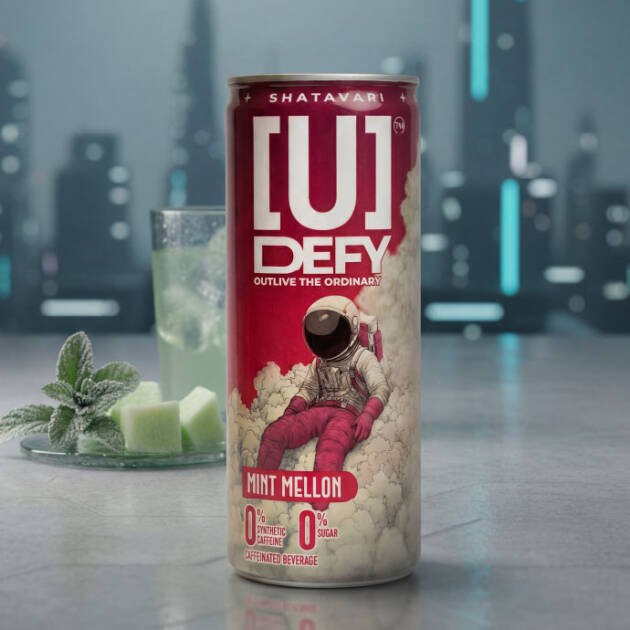
0 g sugar, about 49 mg caffeine and 22 kcal per 250 ml can.
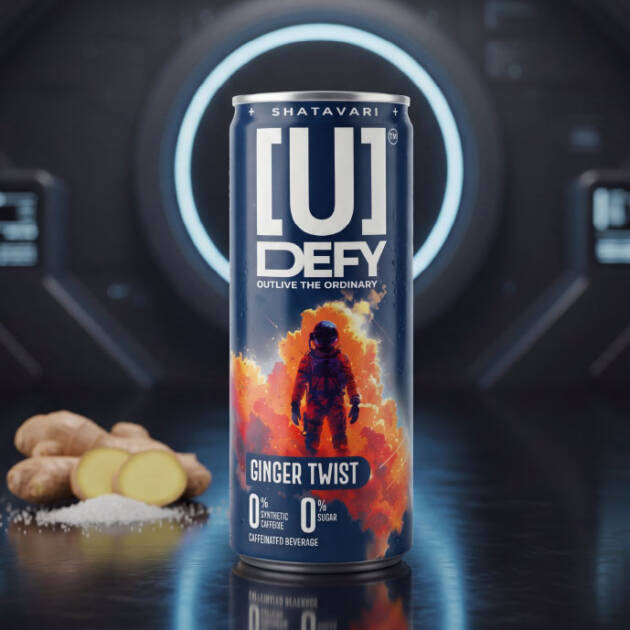
The same zero-sugar build as Mint Melon, with ginger.
Bomb, Ginger Ale and Tonic Water contain sugar. That’s printed on the label, and it’s why we don’t call them sugar-free.
Quick answers
Is a sugar-free energy drink healthy?
It’s a better choice than the sugared version if you’re cutting sugar, but it’s still a caffeinated drink. For most healthy adults, a can now and then fits a normal diet. It isn’t a replacement for water, food or sleep.
Do sugar-free energy drinks have calories?
Usually a few. Mint Melon has about 22 kcal per 250 ml can. A 250 ml drink with 27 g of sugar gets about 108 kcal from the sugar alone.
Can I drink one every day?
Most healthy adults can have up to 400 mg of caffeine a day from all sources, according to Mayo Clinic. Count your chai and coffee too, and stay within the 500 ml a day printed on Indian caffeinated drinks.
Are sugar-free energy drinks OK for children?
No. Indian labels on caffeinated drinks say they aren’t recommended for children, and that applies to sugar-free versions too.
Sources
- WHO: Guideline on sugars intake for adults and children (2015)
- WHO: Advice against non-sugar sweeteners for weight control (2023)
- ICMR-NIN, Dietary Guidelines for Indians (2024)
- FSSAI (Advertising and Claims) Regulations, 2018: nutrition claims
- FSSAI, Food Products Standards and Food Additives Regulations: caffeinated beverages (2.10.6)
- Mayo Clinic: Caffeine, how much is too much?
- Indian nutrition label of a leading 250 ml energy drink
- [U]Defy nutrition labels, per 100 ml (udefy.in product pages)
Sources checked October 2026.